
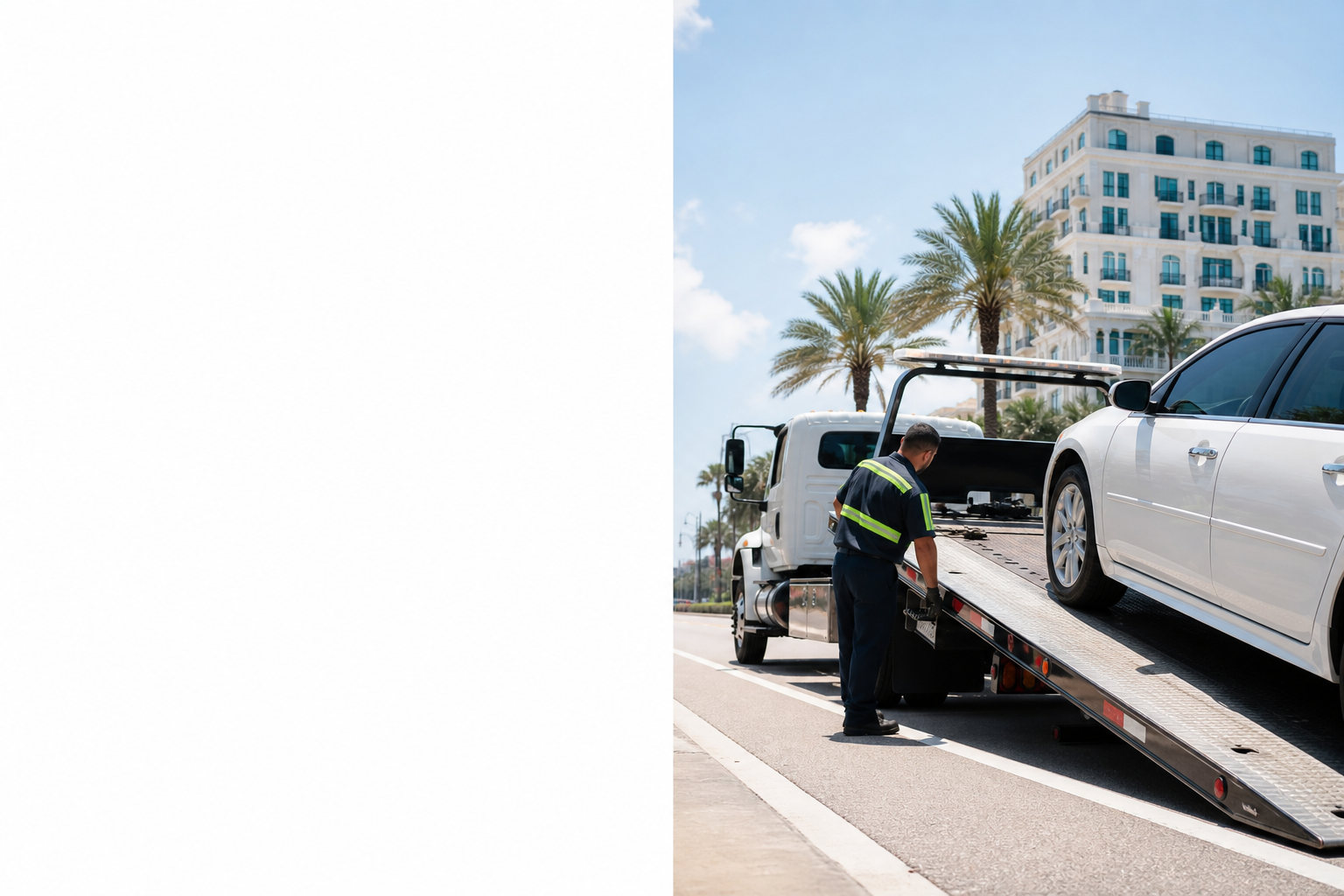
Move the full vehicle on a flat platform
Start with three details: what happened, where the vehicle can be accessed, and where it needs to go. A flatbed tow truck may be suitable when keeping all four wheels off the road is important.
Florida Best Towing may connect you with an available independent towing provider serving West Palm Beach. The provider can review the vehicle’s condition and pickup point before determining the appropriate equipment.
Plan the TowWhen a flatbed may make sense
- A vehicle is disabled and should not roll during transport.
- Collision damage affects a wheel, tire, steering, or suspension.
- The vehicle has low ground clearance or specific transport requirements.
- The car will not shift into neutral or cannot be moved normally.
- The owner wants the vehicle delivered to a chosen repair shop or other permitted destination.
Details that shape the loading plan
Rolling and steering
Explain whether the vehicle rolls, steers, brakes, and shifts into neutral. A locked wheel or damaged suspension can change how the vehicle must be loaded.
Clearance and access
Note low bodywork, missing wheels, blocked access, parking restrictions, or a tight pickup point. These details help the provider assess whether additional loading equipment may be needed.
Destination
Have the destination name and contact details ready. If you are choosing a repair shop, confirm that it can receive the vehicle when the tow arrives.
Plan the flatbed transport
- Explain the issue. Describe the breakdown, damage, warning signs, and whether the vehicle can move.
- Identify the vehicle. Share its year, make, model, drivetrain if known, and any modifications that affect clearance.
- Describe the pickup point. State whether the vehicle is accessible and mention keys, gates, garages, or other constraints.
- Choose the destination. Provide the exact destination and confirm that someone can accept the vehicle if required.
What drivers often need to know
How is flatbed towing different from standard towing?
A flatbed carries the vehicle with all four wheels supported on the truck’s platform. Other towing methods may lift one end while the remaining wheels stay on the road. Vehicle condition, manufacturer guidance, access, and provider assessment determine the suitable method.
Can a flatbed tow a car that will not shift into neutral?
It may be possible, but the provider needs to know before arrival. A vehicle with a locked transmission or wheels may require a different loading approach or additional equipment.
Should I request a flatbed after a collision?
A flatbed may be appropriate when collision damage affects the wheels, steering, suspension, body clearance, or safe rolling of the vehicle. Describe visible damage without trying to drive or reposition an unsafe vehicle.
Do I need to be with the vehicle?
That depends on access, keys, ownership requirements, and the provider’s process. Ask when arranging the tow, and confirm who will release the vehicle and who can receive it at the destination.
What should I share when I call?
Provide the vehicle description, condition, pickup point, access limitations, key availability, and intended destination. Clear information helps separate a roadside fix from vehicle flatbed towing.