
Move the vehicle with its condition in mind
After an accident, first confirm that everyone is safe and follow instructions from police or emergency personnel. Then identify the vehicle’s condition, the pickup point, and where it should go.
Florida Best Towing helps arrange accident towing in West Palm Beach. You may be connected with an available independent towing provider suited to the vehicle and access conditions.
Plan the TowBefore requesting transport
- Describe visible wheel, tire, steering, suspension, or body damage.
- Say whether the vehicle starts, rolls, steers, or shifts into neutral.
- Note blocked access, debris, or a vehicle resting in an unusual position.
- Choose a repair shop, body shop, storage location, or other permitted destination.
What happens when you arrange collision towing
- Explain what happened. Share the vehicle type, condition, pickup point, and any directions provided by law enforcement.
- Confirm the towing method. Damage around the wheels, steering, drivetrain, or body can affect whether a flatbed is appropriate.
- Name the destination. Provide the facility name and address, and confirm that it can receive the vehicle.
- Prepare for release. Keep your identification, vehicle details, and insurance information available if requested.
When a flatbed may make sense
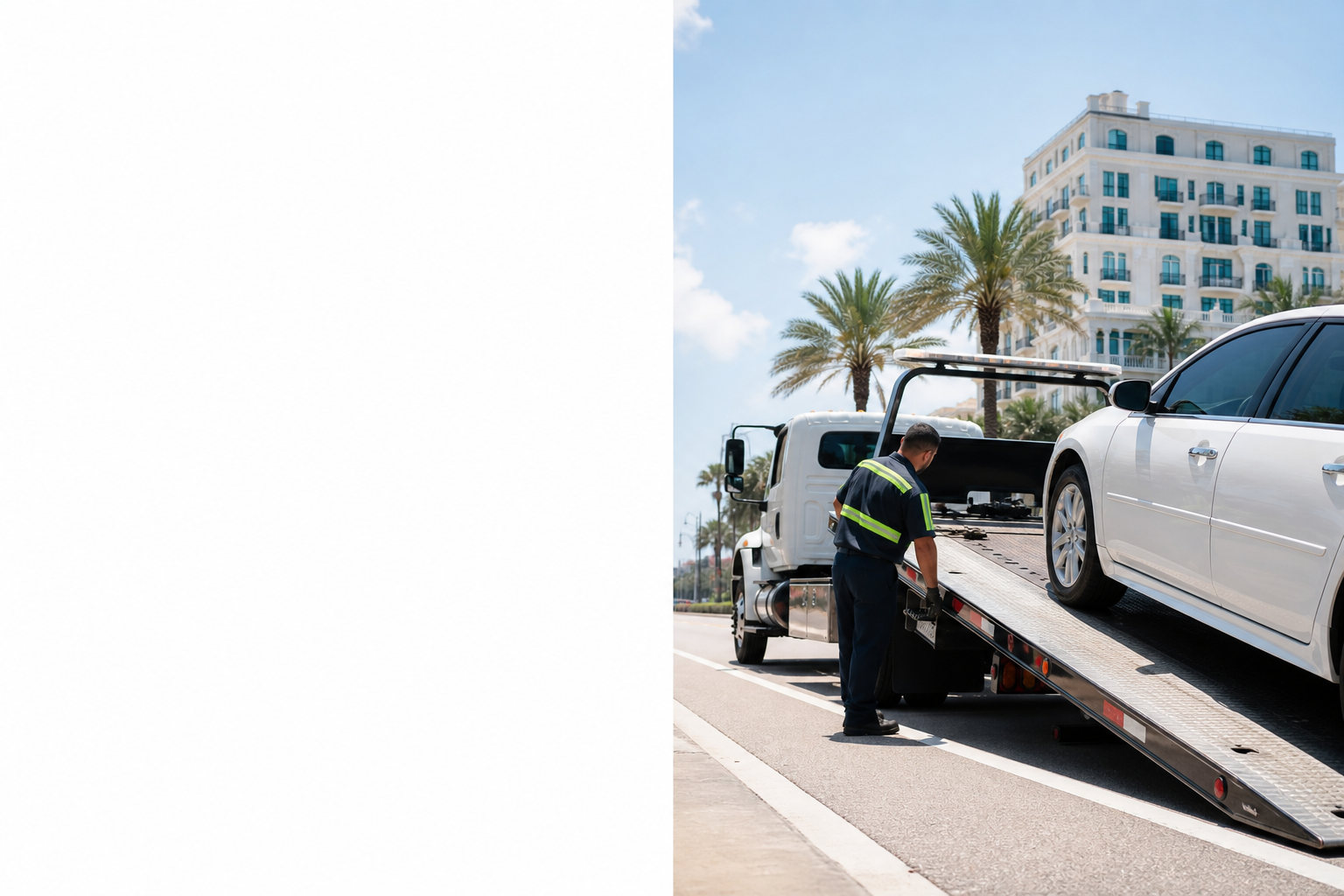
A flatbed carries the vehicle with its wheels off the road. It may be considered when collision damage makes rolling unsafe, a wheel is displaced, steering is impaired, or the vehicle cannot shift normally.
The appropriate method depends on the actual condition and access at the pickup point. Describe the damage rather than trying to drive or reposition a vehicle that may not be roadworthy.
Roadside help or a tow?
A simple battery or tire issue may sometimes be handled with roadside help. After a collision, transport is usually the clearer option when there is leaking fluid, deployed airbags, damaged wheels, impaired steering, warning lights, or uncertainty about safe operation.
Do not enter traffic or stand beside the vehicle if the location is unsafe. Call emergency services for injuries, fire, active traffic danger, or other immediate hazards.
Planning post-accident vehicle transport
Can the vehicle go to the repair shop I choose?
You can provide your intended destination when requesting the tow. Confirm that the shop can accept the vehicle and ask about any restrictions from law enforcement, the property owner, your insurer, or the receiving facility.
Can a vehicle be towed if it will not shift into neutral?
Often, yes, but that condition should be shared before dispatch. The provider can consider the drivetrain, wheel movement, access, and loading method when planning the transport.
Do I need to stay with the vehicle?
Ask when arranging the tow. Provider procedures, vehicle access, keys, law-enforcement instructions, and authorization requirements can affect whether your presence is needed.
What information should I provide?
Share the vehicle make and model, visible damage, whether the wheels roll, pickup access, keys, current instructions at the scene, and the complete destination address.
Arrange the next move
Call with the vehicle condition, pickup point, and preferred destination. Clear details help determine whether standard collision towing or flatbed transport should be considered.
Explain the Vehicle Issue